

Argue? It’s a physics problem that has no solution.
Do we have a way to transfer heat into rock, because I’m thinking lunar data centers.
At medium earth orbit the minimum delay will be about 67ms (250 ms to 600+ ms for geostationary orbits) for LEO it is 25-50 ms. The average ground network ping on a good day is 1ms-20ms.
I skimmed the title for a sec and thought “what’s wrong with orbital stations?” before realizing the utter stupidity that graced my vision.
I had a conversation with a colleague of mine about this. He believed that Musk’s decision to merge xAI and SpaceX was truly because of the potential of datacenters in space. I was unable to convince him that the logistics of this would be a nightmare and that this was just a way to make the Twitter buyout SpaceX’s problem.
That is a huge amount of resources and money just to generate fake videos and porn.
At minimum how would the heat be managed? Also as someone else said, just getting the material from the earth into orbit is currently possible but why?
Is this before or after we colonize mars?
If and only if someone is insane enough to develop off-planet manufacturing with the bulk of the raw materials originating from somewhere in deep space, e.g. asteroid mining, putting data centers in space might be useful for problems that demand intensive compute and can work with extreme latency.
Then again that’s like saying inventing the airplane would have been a good strategy for Neanderthals to find better firewood.
If they build a data center on land and an identical one floating on the ocean, what is the difference in how much heat they emit when I throw thermite grenades at them?
I think they’re a great idea. They don’t use land, don’t continuously use water, and don’t pollute our land and waterways. And, as an added bonus, they’re extremely expensive and a money-pit.
They solve a couple issues but introduce a host of others.
If you focus on the couple issues solved, you’re obviously biased.
I don’t know how that even got past the brainfart stage. AFAIK nobody has actually demonstrated how that would really work.
- Despite SpaceX’s advancements in regards to things like resutable rockets, shooting stuff into space is still prohibitively expensive.
- Server clusters are exceptionally heavy.
- Server clusters run hot, cooling is not a triviality considering you can’t just rely on convection in space, so more mass for alternative solutions.
- Datacenters need regular maintenace.
- Logic boards won’t do well with the radiation in space.
- Despite SpaceX’s advancements in regards to things like sattelite internet, getting large datacenter level quantities of data from earth into space and back, and at low latency, is no triviality.
Not saying this won’t ever be a thing. But not in the lifetime of anybody on earth right now I don’t think.
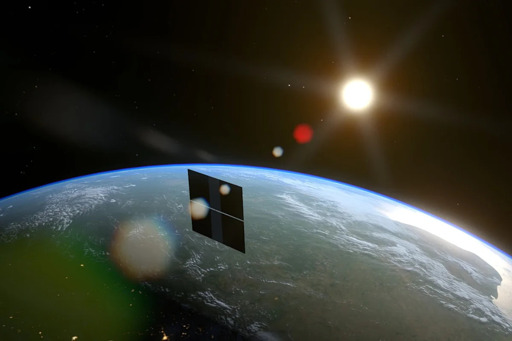
The datacenters are only a little bigger than a v3 starlink. It’s 1 rack of compute, around 125kw avg 150kw peak. The biggest part is the solar array.
There is an unsolvable compute problem. The average PC on earth has multiple bit-flips a year from cosmic rays. The space hardened chips we use are 50nm and the chips used from inference are 4 to 6nm. 50nm is far more cosmic ray resistant than 6nm because of the transistor size. Are we supposed to think making H100s with a 65nm process is possible? The speed of light creates a die size limitation as well.
Either that or they’d have to triplicate everything and have a voting system.
this is the current real solution on the ISS - three main computers doing everything.
The way I see it is they are doing inference, not transfiring bank account balances. I’d be curious to see some actual experimental data, but I’d expect LLMs to skip past bit flips same way you shrug and move on from spelling errors. At worst you can do your critical calculation in triplicate on your 6nm nodes (with redo upon dissensus) and reduce your bit error from 4/year (or 4000/year or whatever have you in orbit) to (4/year)^3
You would need staff living up there to support them. Robotics isn’t up to it.
You think they have people repairing and doing maintenance on starlink?
People don’t understand just how difficult it is to cool stuff in space. Half of the shit sticking out of the ISS that people think are solar panels are actually radiant cooling systems, and the ISS will generate WAY less heat per volume than a data center.
Im seeing the ISS needs to reject 70kw with a max ability of 84kw. The datacenter dishes will be between 125 and 150, so around double or less.
Not to mention the power requirements would likely require more than solar unless they put solar panels up far bigger than anything put up there before.
It will be far bigger. Its mostly solar panels.
Or one of those mini nuclear reactors they are working on
Not saying this won’t ever be a thing.
I’m saying it
What about the latency hit getting data back to earth?
LEO isn’t that far away. StarLink has quite good latency.
Whatever the end latency is, it’ll be higher than starlink as these are going to be in a sun synchronous orbit and they dont talk to earth, they talk via starlink.
So you’ll have to go up to starlink, then laser link the shortest route to the nearest available dish, then back.
You’d have to constantly adjust its orbit. Something that huge with massive radiators and solar panels is going to get a lot of drag.
1000km is still considered LEO and would take hundreds of years to decay. At this distance, you’d add 3ms of latency, which isn’t nothing but acceptable for most applications.
They’ll manufacture it on the moon ofc. We won’t ship it from earth.
This whole idea reminds me of the “putting solar panels on highways” idea that keeps popping up from time to time. Anyone who has ever built anything understands how stupid it is. Even if you could do it, it still wouldn’t make sense over just putting solar panels next to highways.
That, and solar windows.
Making an expensive solar panel that lets most of the energy pass through it, and is not mounted in a way to effectively collect solar energy, is a terrible idea.
I agree, that this is at the moment not a viable thing and especially the SpaceX “concept” is complete bullshit.
I do not agree with some of your points, since they are solved/irrelevant (e.g. “regular maintenance”, “low latency”) or could be overcome with reasonable tech advances (e.g. “rockets prohibitively expensive”, “radiation shielding”).
Let me steelman the argument a bit with this single bit of - sadly forgotten - “super cool and innovative tech”: “Underwater data center”, like project Natick (Microsoft) or the Chinese project:
Soooooo, if we will ever see something other than our current land based data centers, we will see millions of ocean data centers, before we will ever see a single commercial space data center.
Reasons:
- Delivery is super cheap (in comparison to space) at scale, thanks to the already existing wind farm infrastructure
- Weight is not an issue
- Cooling is solved
- Maintenance is not necessary, but replacement is. Easy on scale, because modular.
- No radiation shielding necessary
- Connection: data cable = no extra lag or quantity limit
Oh, and by the way, it is still not clear if even ocean data center will be viable. Just found this 😂
Unless it becomes cheaper than having a datacenter on earth per quanity of compute, it won’t happen in any meaningful scale even if these issues are solved.
It will never be an economic thing. Only unpluggable skynet military thing. The weight is not an issue. though. It’s volume.
Weight is always the issue with lifting stuff into space. Volume might merely be an additional issue.
Starship is huge. I dont know how tightly they can fold these expected dishes, but by weight, they can amd will do 60 starlink v3, and itd be 50 datacenter dishes equivalent. How many they can actually launch is going to depend on how well the solar and radiator folds down, so it might be a volume issue vs weight.
I’m far more concerned with the suggested floating datacenters. Just dumping more waste heat into the ocean. WCGW.
If the floating data center is solar powered it wouldn’t actually add any heat that the patch of ocean covered wouldn’t already be getting.
You wildly underestimate the size of the oceans. If they’re going to be built anyway, and if they can have a long lifespan even in salt water, this would be far better for the environment than the currently popular method of using rivers for cooling - rivers can be warmed by perceptible and significant amounts until they carry that extra heat into the oceans, plus fresh water is more rare, precious, and in need of protection than salt water.
If the heat made by the data centers can warm rivers, and those rivers can warm the oceans… Aren’t the data centers already warming the oceans? Which would mean that putting data centers directly in the ocean would definitely warm the oceans?
Temperature is what matters. The same amount of heat out into a river can significantly warm the whole river downstream, but have no detectable effect on the ocean temperature, just because the heat is diluted so much.
Like, dilute a bottle of tequila with two liters of cola, sure you’ll get drunk - but pour that same tequila into a full swimming pool, and you’d never get drunk even if you drink the pool water all day.
You understand rivers largely empty into oceans, right? Your tequila analogy leaves that part out. Eventually, you’re still dumping tequila (heat) into the pool (ocean).
The effects of heat are all due to temperature, which is reduced by dilution.
The alcohol molecules represent heat energy (Joules), and the ABV% represents temperature (Kelvin).
Rivers are small enough to be negatively affected by data center waste heat, but oceans really aren’t. They are being affected by the greenhouse effect though, because that is on a scale of petawatts, a million times the gigawatt scale of all global data centers together.
It’s a matter of size. You’ll be dumping the tequila into the pool, but the alcohol percentage of the pool is in all practical sense, still 0.
The size of the pool is of no importance globally. You’re still creating the same amount of heat
The only real difference is that the river heat can get higher because it’s more localised and, therefore, can cause more trouble along the way.
But from the pov of the ocean ? Rounding error
Does it actually make much of a difference whether it’s dumped into the ocean or into the atmosphere? I thought the ocean warming happens because the atmosphere is hotter.
That space data center might end up dumping more waste into the oceans with all thise launches but certainly more into our atmosphere.
don’t need to think much about this crackpot idea.
where would the heat dissipate? that just ends this topic.
Via radiation into space. All you need is a radiator, the weight of a battleship (or worse). Yes, the idea is crazy.
Around or less than twice the size of the ISS radiator.