"It really seems like anyone with some renders and a white paper written by someone being gassed up by an overly agreeable AI can get VC funding these days."
You wildly underestimate the size of the oceans. If they’re going to be built anyway, and if they can have a long lifespan even in salt water, this would be far better for the environment than the currently popular method of using rivers for cooling - rivers can be warmed by perceptible and significant amounts until they carry that extra heat into the oceans, plus fresh water is more rare, precious, and in need of protection than salt water.
The heat from something like a datacenter will be far more localized and could damage the immediate area. I’m not saying they’ll magically warm the entire ocean any more than they would on land dumping waste heat into the atmosphere, but local temperature changes could have an effect.
I’m not in favor of megawatt data centers being used for mostly-bullshit AI in general, but as I said “if they’re going to be built anyway”, then they’ll do less harm in the ocean than most other places.
(That’s assuming they can avoid problems due to saltwater corrosion.)
A datacenter on land that relies on water for cooling is using fresh water. Aside from the insane and undesirable use of fossil water or groundwater, fresh water has a much higher ratio of surface area exposed to air and volume than the ocean does.
That ratio is important because you can only evaporate off the surface, so the same volume of water would evaporate faster in a frying pan than it would in a saucepan given the same conditions.
Freshwater is also smaller than the ocean by many orders of magnitude. That’s important because a smaller body of water will heat up more than a larger one given the same conditions.
Freshwater is also generally speaking moving towards the ocean somehow in a complex process called the water cycle. It might flow down a hill into the ocean, it might drip through aquifers to the ocean and it might evaporate and fall as rain either in the ocean or somewhere else where it takes some other path towards sea level.
That last part is important because in America rivers like the ones in Colorado and California have been reduced in volume so much due to of a bunch of manmade events and earthworks that they now lose a higher portion of their volume to evaporation as opposed to flow. That’s a big deal because the Colorado for example flows south but water vapor that comes off of it is blown east. So now much more of the rivers water is going into the desert as opposed to reaching the ocean. The water cycle has been disrupted.
Freshwater is also comparatively super rare and necessary for life on land.
So if you were water cooling a datacenter it would be better to use the huge ocean with much lower surface area to volume ratio and much more volume than to use the rare freshwater that will get heated up much more by the same energy, evaporate faster, we already know can have its water cycle disrupted and all life on land relies on.
Now a person might ask “what about the sea life, doesn’t it matter?” Of course sea life matters, but the way that sea life handles an increase in temperature that’s localized to one specific area is to just go away from there, like it does when undersea magma vents pop up. When the freshwater gets too hot it all evaporates away, there’s no water and the land animals die.
A person might say: “well don’t animals die when the oceans get hot too?” And they’re right! An average increase of .5 degrees c in sea surface temperatures would lead to massive coral bleaching. But enough energy to raise the sea surface temperatures .5c is phenomenally huge. Like getting more sun huge. Because that’s what’s raising it, getting more sun. Datacenters produce so little heat energy in comparison to that level of power that it’s not a concern.
If the heat made by the data centers can warm rivers, and those rivers can warm the oceans… Aren’t the data centers already warming the oceans? Which would mean that putting data centers directly in the ocean would definitely warm the oceans?
Temperature is what matters. The same amount of heat out into a river can significantly warm the whole river downstream, but have no detectable effect on the ocean temperature, just because the heat is diluted so much.
Like, dilute a bottle of tequila with two liters of cola, sure you’ll get drunk - but pour that same tequila into a full swimming pool, and you’d never get drunk even if you drink the pool water all day.
You understand rivers largely empty into oceans, right? Your tequila analogy leaves that part out. Eventually, you’re still dumping tequila (heat) into the pool (ocean).
The effects of heat are all due to temperature, which is reduced by dilution.
The alcohol molecules represent heat energy (Joules), and the ABV% represents temperature (Kelvin).
Rivers are small enough to be negatively affected by data center waste heat, but oceans really aren’t. They are being affected by the greenhouse effect though, because that is on a scale of petawatts, a million times the gigawatt scale of all global data centers together.


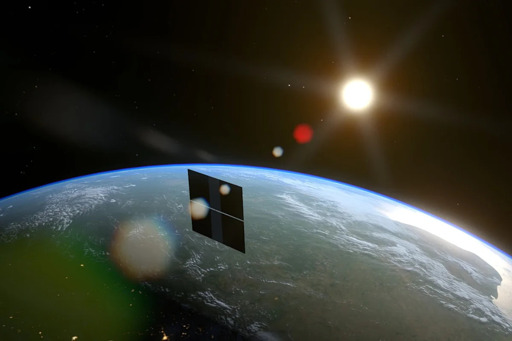
You wildly underestimate the size of the oceans. If they’re going to be built anyway, and if they can have a long lifespan even in salt water, this would be far better for the environment than the currently popular method of using rivers for cooling - rivers can be warmed by perceptible and significant amounts until they carry that extra heat into the oceans, plus fresh water is more rare, precious, and in need of protection than salt water.
The heat from something like a datacenter will be far more localized and could damage the immediate area. I’m not saying they’ll magically warm the entire ocean any more than they would on land dumping waste heat into the atmosphere, but local temperature changes could have an effect.
I’m not in favor of megawatt data centers being used for mostly-bullshit AI in general, but as I said “if they’re going to be built anyway”, then they’ll do less harm in the ocean than most other places.
(That’s assuming they can avoid problems due to saltwater corrosion.)
Ok, how will they be less harmful, seeing as you’re so insistent on that premise.
A datacenter on land that relies on water for cooling is using fresh water. Aside from the insane and undesirable use of fossil water or groundwater, fresh water has a much higher ratio of surface area exposed to air and volume than the ocean does.
That ratio is important because you can only evaporate off the surface, so the same volume of water would evaporate faster in a frying pan than it would in a saucepan given the same conditions.
Freshwater is also smaller than the ocean by many orders of magnitude. That’s important because a smaller body of water will heat up more than a larger one given the same conditions.
Freshwater is also generally speaking moving towards the ocean somehow in a complex process called the water cycle. It might flow down a hill into the ocean, it might drip through aquifers to the ocean and it might evaporate and fall as rain either in the ocean or somewhere else where it takes some other path towards sea level.
That last part is important because in America rivers like the ones in Colorado and California have been reduced in volume so much due to of a bunch of manmade events and earthworks that they now lose a higher portion of their volume to evaporation as opposed to flow. That’s a big deal because the Colorado for example flows south but water vapor that comes off of it is blown east. So now much more of the rivers water is going into the desert as opposed to reaching the ocean. The water cycle has been disrupted.
Freshwater is also comparatively super rare and necessary for life on land.
So if you were water cooling a datacenter it would be better to use the huge ocean with much lower surface area to volume ratio and much more volume than to use the rare freshwater that will get heated up much more by the same energy, evaporate faster, we already know can have its water cycle disrupted and all life on land relies on.
Now a person might ask “what about the sea life, doesn’t it matter?” Of course sea life matters, but the way that sea life handles an increase in temperature that’s localized to one specific area is to just go away from there, like it does when undersea magma vents pop up. When the freshwater gets too hot it all evaporates away, there’s no water and the land animals die.
A person might say: “well don’t animals die when the oceans get hot too?” And they’re right! An average increase of .5 degrees c in sea surface temperatures would lead to massive coral bleaching. But enough energy to raise the sea surface temperatures .5c is phenomenally huge. Like getting more sun huge. Because that’s what’s raising it, getting more sun. Datacenters produce so little heat energy in comparison to that level of power that it’s not a concern.
If the heat made by the data centers can warm rivers, and those rivers can warm the oceans… Aren’t the data centers already warming the oceans? Which would mean that putting data centers directly in the ocean would definitely warm the oceans?
Temperature is what matters. The same amount of heat out into a river can significantly warm the whole river downstream, but have no detectable effect on the ocean temperature, just because the heat is diluted so much.
Like, dilute a bottle of tequila with two liters of cola, sure you’ll get drunk - but pour that same tequila into a full swimming pool, and you’d never get drunk even if you drink the pool water all day.
You understand rivers largely empty into oceans, right? Your tequila analogy leaves that part out. Eventually, you’re still dumping tequila (heat) into the pool (ocean).
The effects of heat are all due to temperature, which is reduced by dilution.
The alcohol molecules represent heat energy (Joules), and the ABV% represents temperature (Kelvin).
Rivers are small enough to be negatively affected by data center waste heat, but oceans really aren’t. They are being affected by the greenhouse effect though, because that is on a scale of petawatts, a million times the gigawatt scale of all global data centers together.
It’s a matter of size. You’ll be dumping the tequila into the pool, but the alcohol percentage of the pool is in all practical sense, still 0.
The size of the pool is of no importance globally. You’re still creating the same amount of heat
The only real difference is that the river heat can get higher because it’s more localised and, therefore, can cause more trouble along the way.
But from the pov of the ocean ? Rounding error